
September 8, 2026
OBD vs. Hardwired GPS Trackers: Which One Should Turo Hosts Use?
OBD vs. Hardwired GPS Trackers: Which One Should Turo Hosts Use?
If you rent cars on Turo, manage a small rental fleet, or provide vehicles for clients, you've probably asked yourself: Should I use a plug-in OBD GPS tracker or a hardwired GPS tracker?
Both can track a vehicle's location and help you recover a vehicle if it is stolen or not returned. But they are designed for different situations.
The biggest difference is simple: OBD trackers prioritize convenience, while hardwired trackers prioritize security and discretion.
Here's how they compare and which option makes the most sense for rental and fleet vehicles.
What Is an OBD GPS Tracker?
An OBD GPS tracker plugs directly into your vehicle's OBD-II diagnostic port — the same port a mechanic uses to diagnose vehicle problems.
Installation is simple: locate the OBD-II port, plug in the tracker, and you're ready to go. No wiring or professional installation is required.
Advantages of OBD Trackers
Fast installation — usually takes less than a minute
DIY installation — no tools or professional installer required
Easy to move — transfer the tracker between vehicles
No permanent wiring — installation is completely reversible
Disadvantages of OBD Trackers
Easy to find — the device is usually visible under the dashboard
Easy to unplug — a renter can potentially disconnect it
Uses the OBD port — the port may be needed by a mechanic or diagnostic equipment
Less discreet — not ideal when you want the tracker hidden
For personal vehicles or situations where portability is important, an OBD tracker can be a convenient solution.
What Is a Hardwired GPS Tracker?
A hardwired GPS tracker connects directly to the vehicle's electrical system. Depending on the installation, it can be connected to constant or switched power and hidden behind the dashboard, trim, or near the fuse box.
Unlike an OBD tracker, there is no obvious device sitting in the diagnostic port.
Advantages of Hardwired Trackers
Hidden installation — much harder for a renter to locate
More difficult to disable — there is no simple plug to pull
Doesn't occupy the OBD port
Ideal for long-term vehicle use
Can support additional features, such as a remote starter-disable or kill-switch system
Disadvantages of Hardwired Trackers
More complicated installation — professional installation may be preferred
Less portable — the tracker generally stays with the vehicle
Takes longer to install than an OBD tracker
For rental cars and fleet vehicles, the added installation effort can be worthwhile because the tracker can remain hidden and permanently installed.
OBD vs. Hardwired: What's the Difference?
| Comparison | OBD | Hardwired |
|---|---|---|
| Installation | Seconds, DIY | Longer, often professional |
| Visibility | Usually visible | Can be completely hidden |
| Ease of removal | Very easy | Much more difficult |
| Portability | Easy to move between vehicles | Stays with the vehicle |
| OBD port | Occupies the port | Leaves the port available |
| Best for | Personal vehicles and temporary use | Rental fleets and long-term use |
| Kill-switch capability | Depends on device | Better suited for integrated systems |
Which Is Better for Turo Hosts?
For a Turo host, the answer often comes down to how much security and discretion you need.
An OBD tracker is convenient and inexpensive to install. But if a renter can easily see the tracker under the dashboard, they may also be able to unplug it.
A hidden hardwired tracker is much more difficult to locate and disconnect. That makes it particularly attractive for rental fleets where vehicles are regularly being driven by people you don't know.
If your primary goal is simply knowing where the vehicle is, OBD can be perfectly adequate.
If your priorities include theft recovery, hidden installation, long-term tracking, and additional vehicle-control capabilities, hardwired is generally the better choice.
Why We Built MooveTrax to Support Both
We don't think every vehicle should be forced into the same installation method.
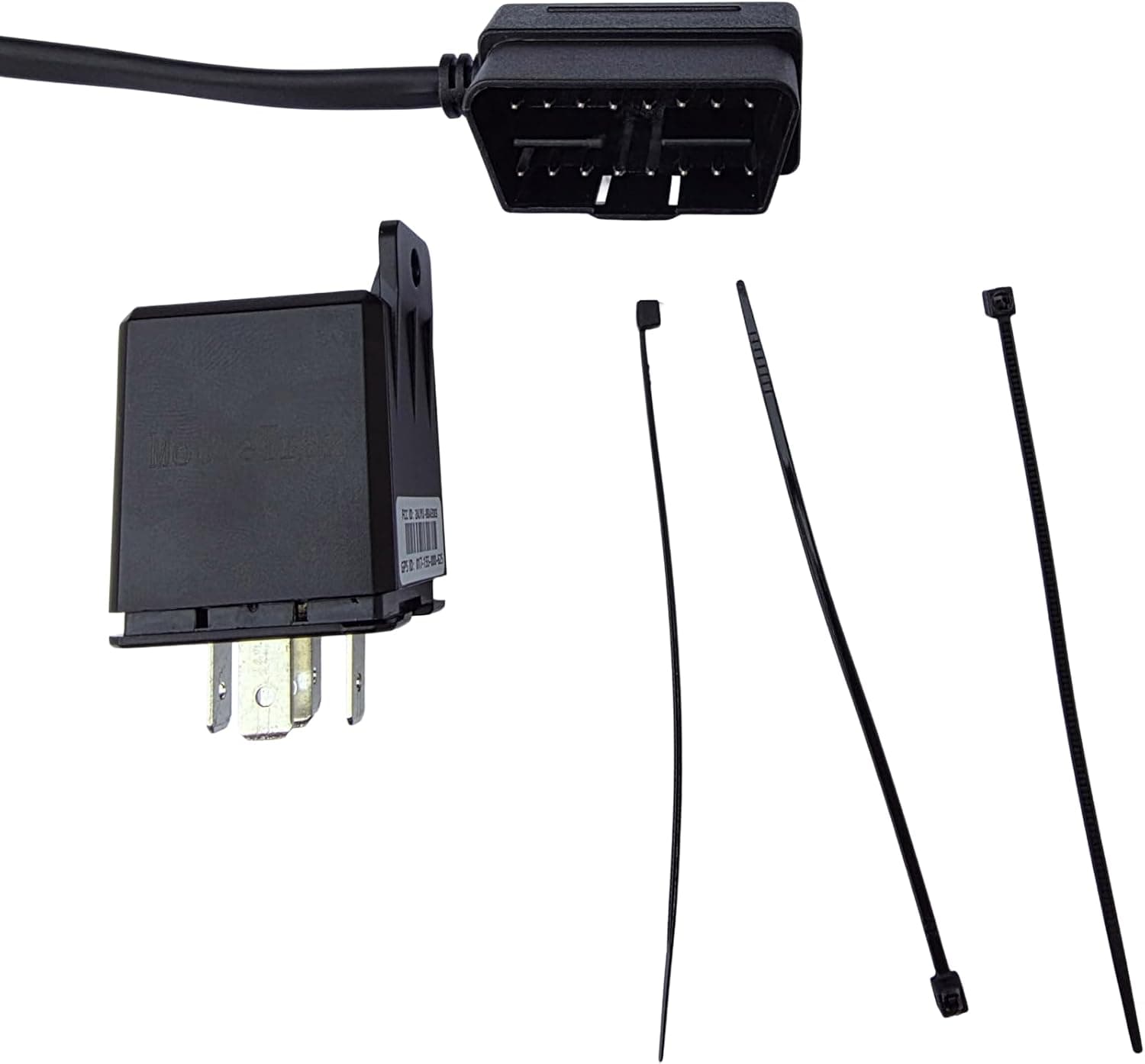
That's why the MooveTrax OBD & Hardwired GPS Tracker supports both installation options from the same device.
MooveTrax OBD & Hardwired GPS Tracker on Amazon
Need a quick installation? Use the OBD connection.
Want a more discreet, permanent installation? Have the tracker hardwired and hidden inside the vehicle.
That flexibility means you can choose the installation method that makes sense for each vehicle in your fleet.
MooveTrax Features
Remote kill switch — remotely disable the vehicle when supported by the vehicle's wiring and installation
Geofencing — create boundaries around cities, neighborhoods, airports, or other areas and receive entry and exit alerts
Nested geofences — create multiple overlapping geographic zones
Toll tracking — monitor toll activity associated with your vehicles
Maintenance tracking — keep track of maintenance by date or mileage
4G LTE connectivity — reliable cellular connectivity for vehicle tracking
$12.50/month service plan — simple monthly pricing with no long-term contract
OBD or Hardwired: Which Should You Choose?
Here's the simple version:
Choose OBD if you want:
Fast DIY installation
Easy portability
A tracker you can move between vehicles
No permanent installation
Choose hardwired if you want:
A hidden tracker
Better protection against tampering
A permanent installation
Support for vehicle-control features such as a kill switch
A solution designed for rental fleets and long-term use
And if you're not sure which installation method you'll need in the future, choosing a tracker that supports both OBD and hardwired installation gives you the flexibility to change your setup without replacing the device.
For Turo hosts and fleet operators, that flexibility can be especially valuable as your fleet grows.
Have questions about which installation method is right for your vehicle? Contact MooveTrax and we'll help you determine the best setup for your fleet.